Português
 Español
DIY TL072 Hi-Fi Preamp: Professional Build + PCB Layout

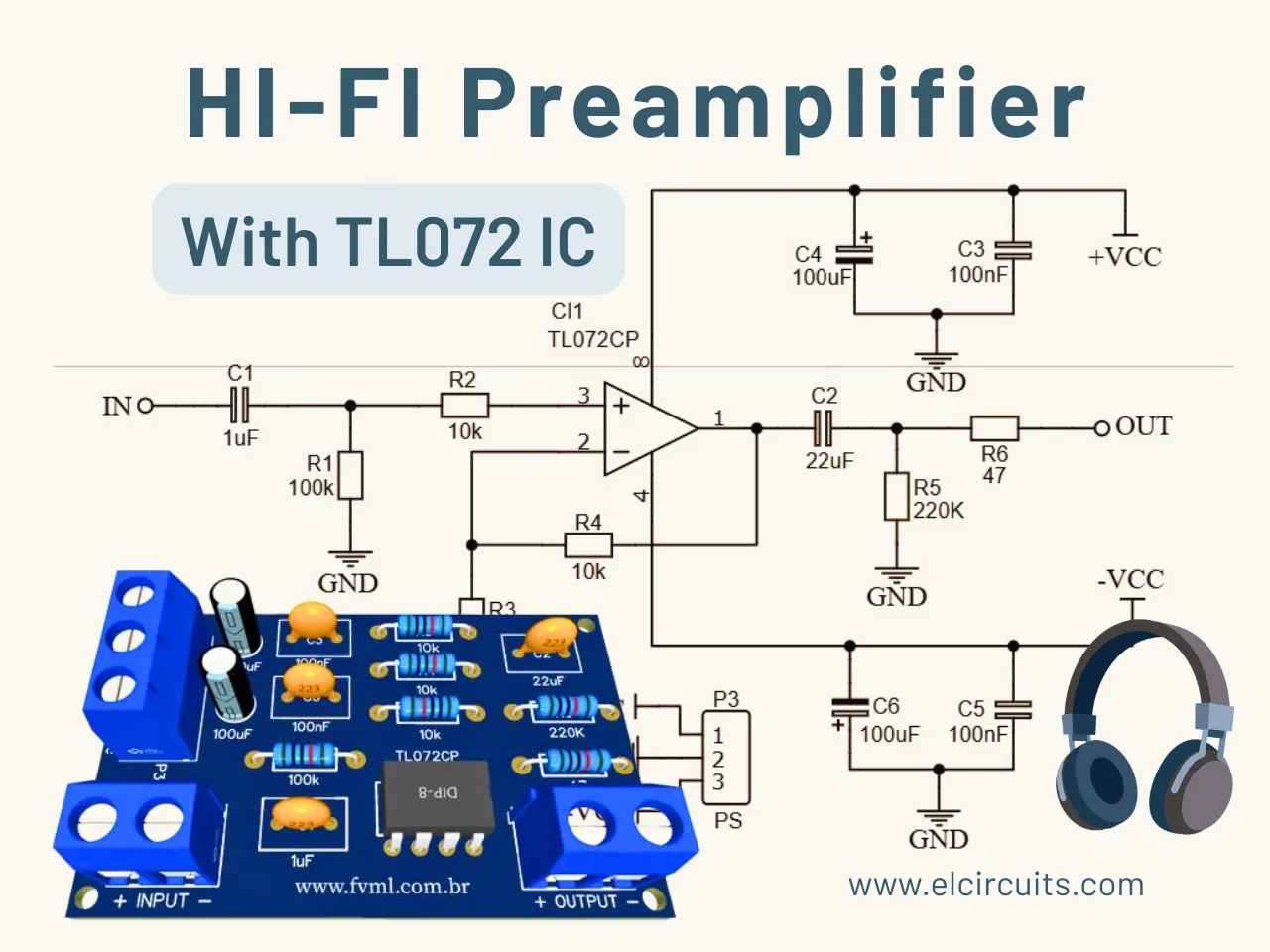
Hello, electronics and high-quality audio enthusiasts!
Today we will dive into the fascinating world of HI-FI preamplifiers with a simple yet extremely effective project using the iconic TL072 Integrated Circuit. If you seek exceptional sound quality for your musical instruments or audio system, you are in the right place!
⚙️ What Makes the TL072 Special for HI-FI Audio?
The TL072 is considered a HI-FI (High Fidelity) component due to its exceptional signal-to-noise ratio, which results in crystal clear and well-defined sound quality. This integrated circuit is ideal for preamplification systems that demand the utmost quality, such as guitars, acoustic guitars, bass guitars, and other sensitive musical instruments.
Preamplifiers are delicate circuits that work with very small signals, making them susceptible to noise and unwanted interference. Therefore, we strongly recommend the use of high-quality shielded cables to avoid picking up electromagnetic noise that could compromise the purity of your audio.
🔌 Circuit Schematic Diagram
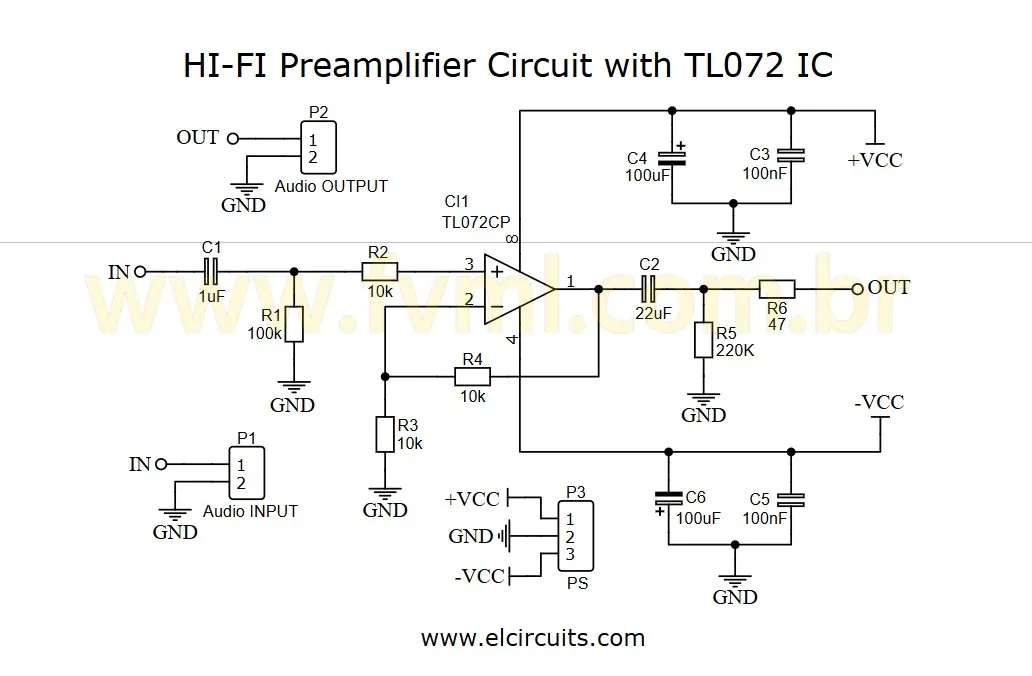
In the schematic diagram of Figure 2, you will find the precise arrangement of all components. Pay special attention to the filter capacitors, as they are essential to eliminate unwanted noise and ensure the purity of the audio signal.
⛏️ Building your preamplifier: What you need to know
This circuit is surprisingly simple to assemble, but the secret to achieving exceptional results lies in the quality of the components. The TL072 Integrated Circuit must be from a reliable source, as low-quality versions will significantly compromise the performance of your preamplifier.
Although our project does not include a gain adjustment with a potentiometer, you can easily add a 10K one at the input if you need additional control over the signal level.
🔬 TL072 Technical Features
- ✅ Low power consumption - Ideal for portable projects
- ✅ Wide common-mode and differential voltage ranges - Greater application versatility
- ✅ Low input bias and offset currents - Less distortion
- ✅ Output short-circuit protection - Greater component durability
- ✅ Low total harmonic distortion - Only 0.003% Typical
- ✅ Low Noise - Vn = 18nV/√Hz Typical at f = 1kHz
- ✅ High input impedance - Thanks to the JFET input stage
- ✅ Internal frequency compensation - Stable response across the entire audio range
- ✅ Latch-up free operation - Reliable operation even in extreme conditions
🛠️ Component List
| Component | Specification | Color Code |
| IC1 | Integrated Circuit TL072CP | - |
| R1 | Resistor 100kΩ | Brown, black, yellow |
| R2, R3, R4 | Resistor 10kΩ | Brown, black, orange |
| R5 | Resistor 220kΩ | Red, red, yellow |
| R6 | Resistor 47Ω | Yellow, violet, black |
| C1 | Polyester Capacitor 1μF | - |
| C2 | Polyester Capacitor 22μF | - |
| C3, C5 | Polyester Capacitor 100nF | - |
| C4, C6 | Electrolytic Capacitor 100μF | - |
| J1, J2 | 1/4" Female Jacks | - |
| Miscellaneous | Wires, solder, printed circuit board, etc. | |
💡 Teacher's Tip
To get the best performance from your preamplifier, consider using components with 1% tolerance for critical resistors (R1, R2, R3, R4, and R5) and polypropylene or mica capacitors for C1 and C2. Small investments in higher quality components can result in significant improvements in the final sound quality.
🖨️ Printed Circuit Board (PCB)
To facilitate your assembly, we have made the files for the Printed Circuit Board (PCB) designed specifically for this equalizer available. The PCB was carefully planned to minimize interference and ensure maximum signal quality.
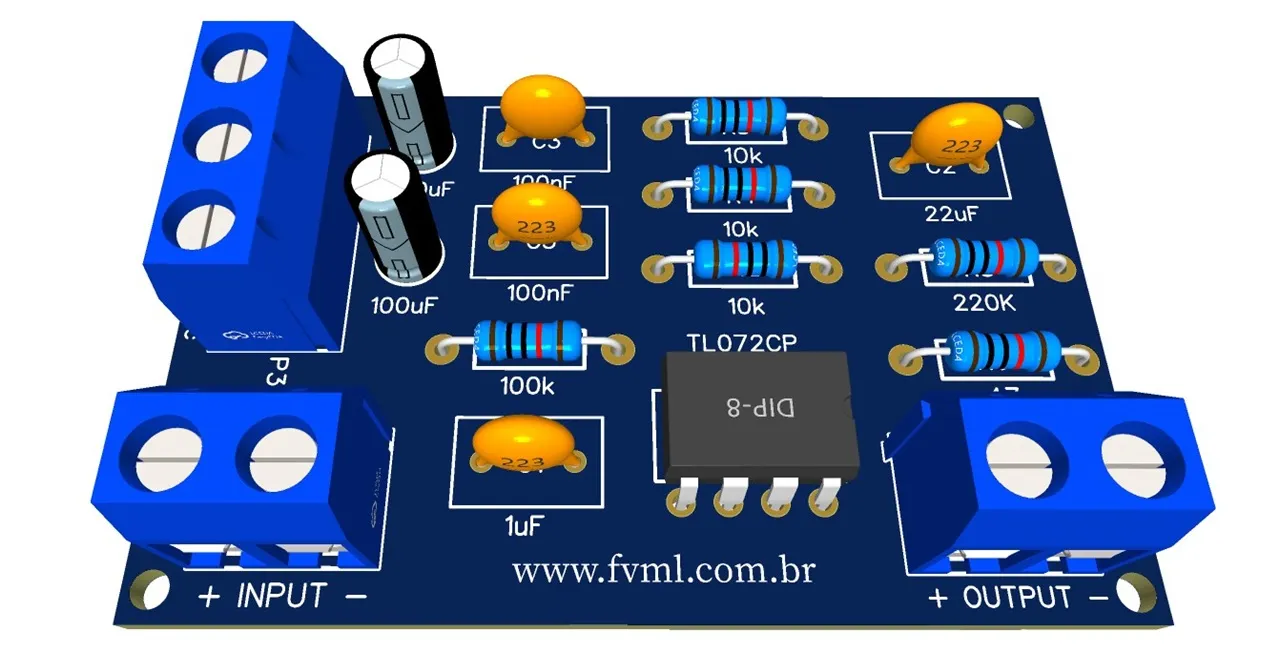
The files are available in GERBER, PDF, and PNG formats, covering all your needs, whether for home assembly or sending to professional manufacturing. The PCB layout follows audio circuit design best practices, with properly sized tracks and strategic component placement.
📥 Direct Download Link
To download the necessary files to assemble the electronic circuit, simply click on the direct link provided below:
🤔 Frequently Asked Questions (FAQ)
To ensure your project is a success, we have compiled some of the most common questions on this topic. Check it out!
What is the difference between the TL072 and other operational ICs? 🔽
The TL072 stands out for its combination of low noise, high input impedance (thanks to the input JFETs) and excellent frequency response. Compared to the popular 741, for example, the TL072 offers significantly less noise and distortion, making it ideal for high-quality audio applications.
Can I power this circuit with a battery? 🔽
Yes! The TL072 has low power consumption (approximately 2.5mA per amplifier), making it suitable for battery operation. A 9V battery would be sufficient to power the circuit for several hours, ideal for portable applications such as guitar effect pedals.
How can I adjust the gain of this preamplifier? 🔽
You can modify the circuit gain in two ways: 1) Replacing R5 with a 220KΩ potentiometer for variable gain control, or 2) Adding a 10KΩ potentiometer at the circuit input to control the input signal level. Remember that changing these values will affect the frequency response and the input impedance of the circuit.
Can this preamplifier be used with microphones? 🔽
This circuit is designed primarily for line-level instruments. For microphones, especially dynamic or condenser ones, you would need to modify the circuit to include phantom power (in the case of condenser microphones) and adjust the input impedance and gain for the lower microphone signal levels.
🎓 Conclusion: Transforming your audio with professional quality
This TL072 IC preamplifier represents an excellent opportunity to elevate your audio quality to a professional level, whether for home recordings, live performances, or simply to enjoy your favorite music with greater clarity and definition.
Remember that in audio electronics, every detail counts, from the quality of the components to the circuit board layout and the type of wiring used. With this project, you are on the right path to obtaining high-fidelity sound that will make all the difference in your applications.
🎧 Want to try this project?
Assemble your own preamplifier and share the results with us! We would love to see how this circuit transformed your audio experience.
Leave a comment below with your questions, suggestions, or experiences with this circuit!
✨ Our Gratitude and Next Steps
We sincerely hope this guide has been useful and enriching for your projects! Thank you for dedicating your time to this content.
Your Feedback is Invaluable:
Have any questions, suggestions, or corrections? Feel free to share them in the comments below! Your contribution helps us refine this content for the entire ElCircuits community.
If you found this guide helpful, share the knowledge!
🔗 Share This GuideBest regards,
The ElCircuits Team ⚡